Local Carbon
2026
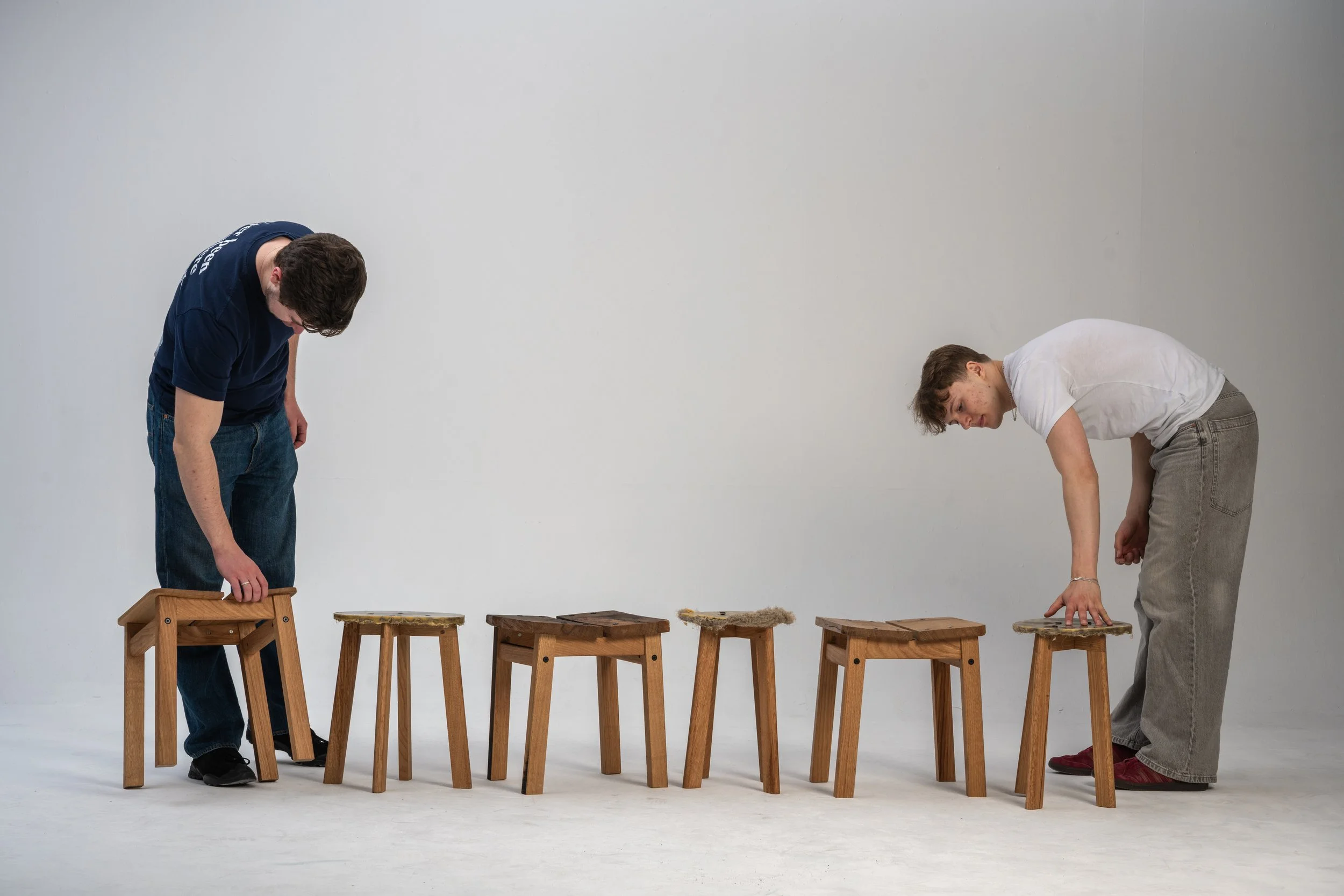
This project started with what should have been a simple aim: to produce low carbon wooden furniture, yet it wasn’t simple. Using local timber, these stools explore three approaches to processing, their resulting carbon footprints and whether furniture is, in fact, over processed.
Why timber?
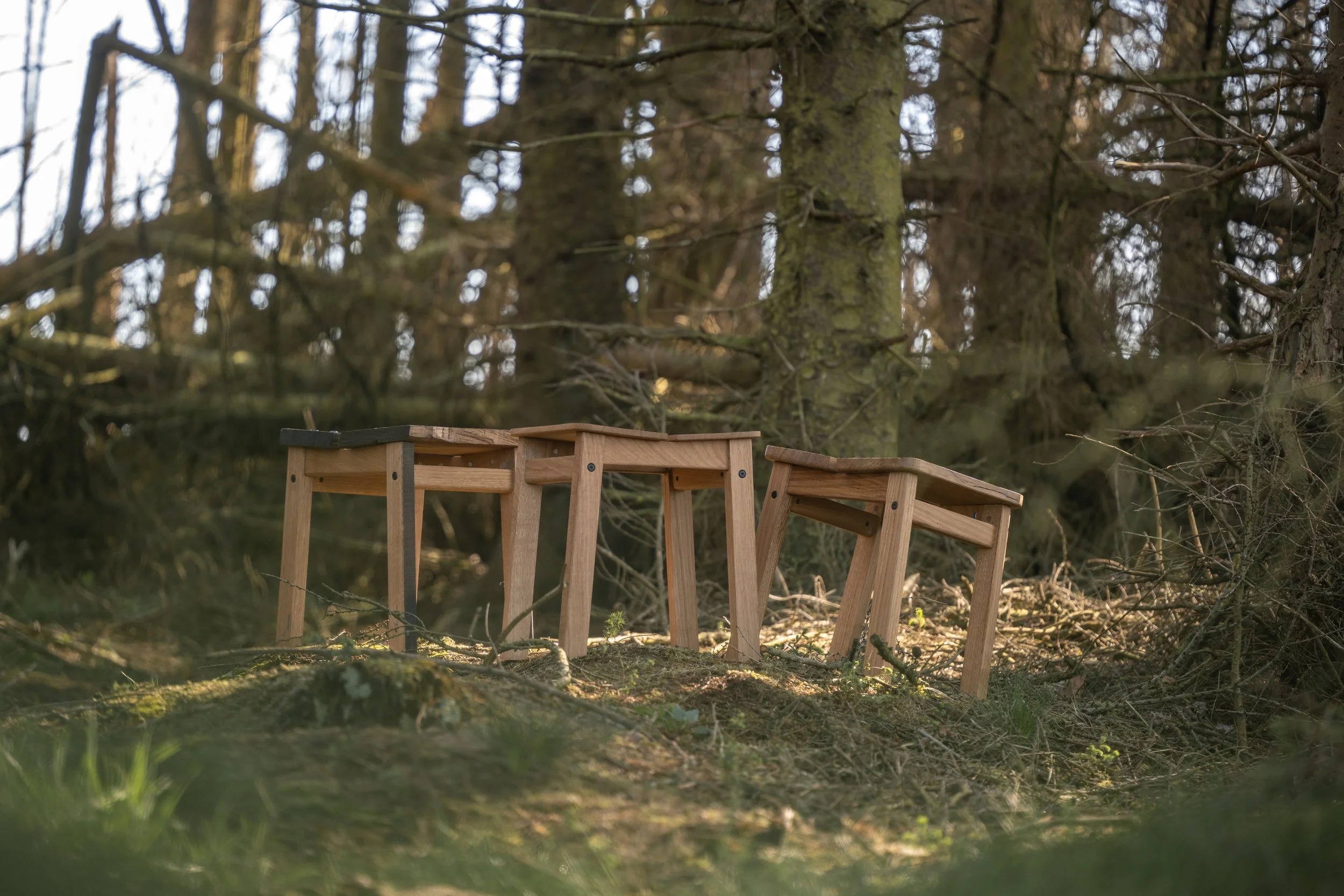
Timber seems like the obvious choice for low-carbon furniture. Trees capture carbon dioxide from the atmosphere as they grow, storing that carbon within their timber for generations to come. But dig a little deeper and it’s not so obvious. Ever thought about where timber actually comes from? You’d think the UK, right? Wrong. A significant amount used in the UK is imported from overseas. This means that when the tree has spent years sequestering carbon, transporting the resulting timber to the UK causes additional emissions before it is even processed. Imagine if the timber was grown locally instead?
How to find local timber?
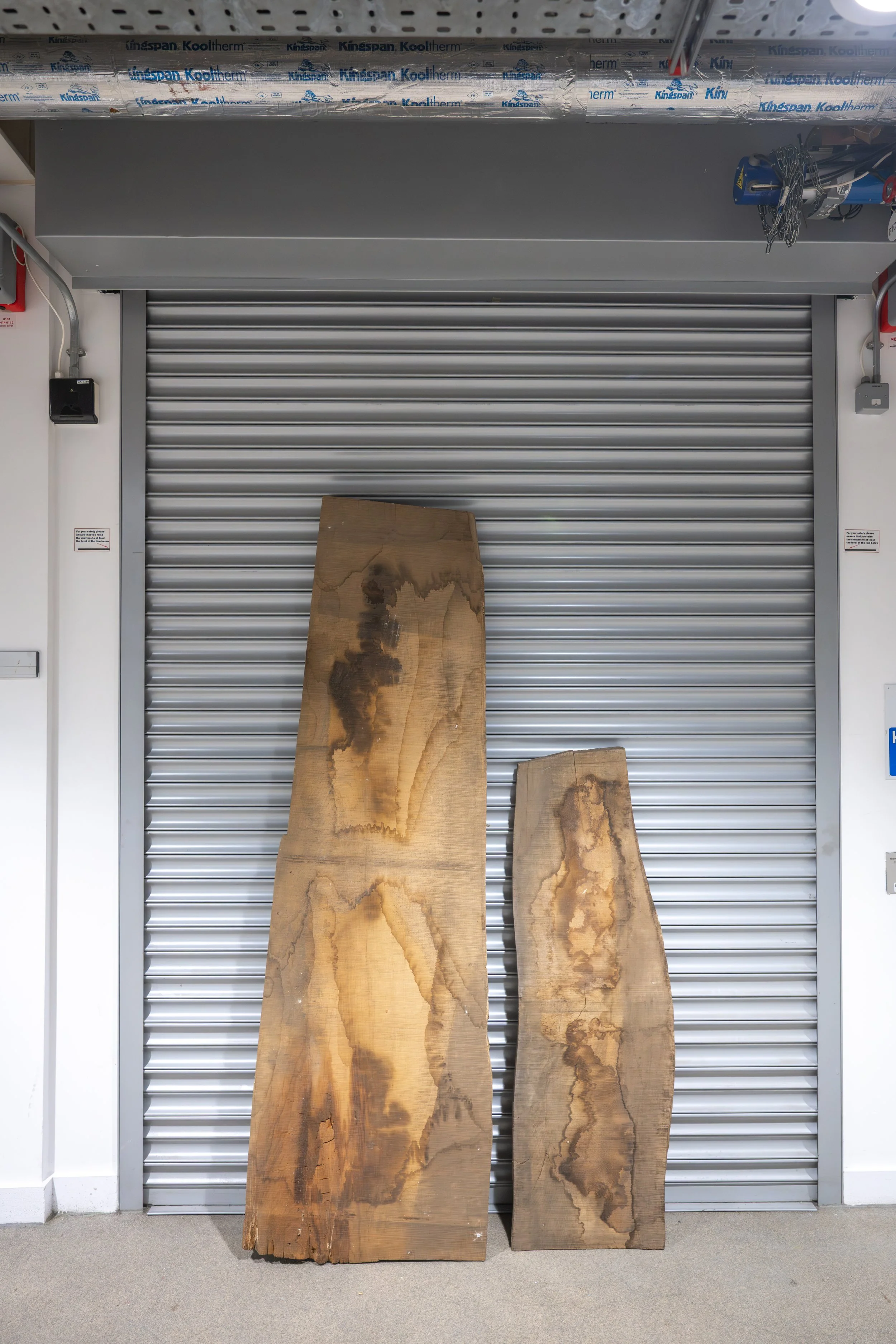
Two slabs sourced locally, grown just 26 miles from the workshop. From a Sawyer who still remembers driving them home. Choosing locality rather than species resulted in two different slabs with the same potential. The larger sweet chestnut once stood where a housing estate now stands. The smaller oak stood graciously in someone’s garden. Local, traceable, low carbon.
How to process timber ?
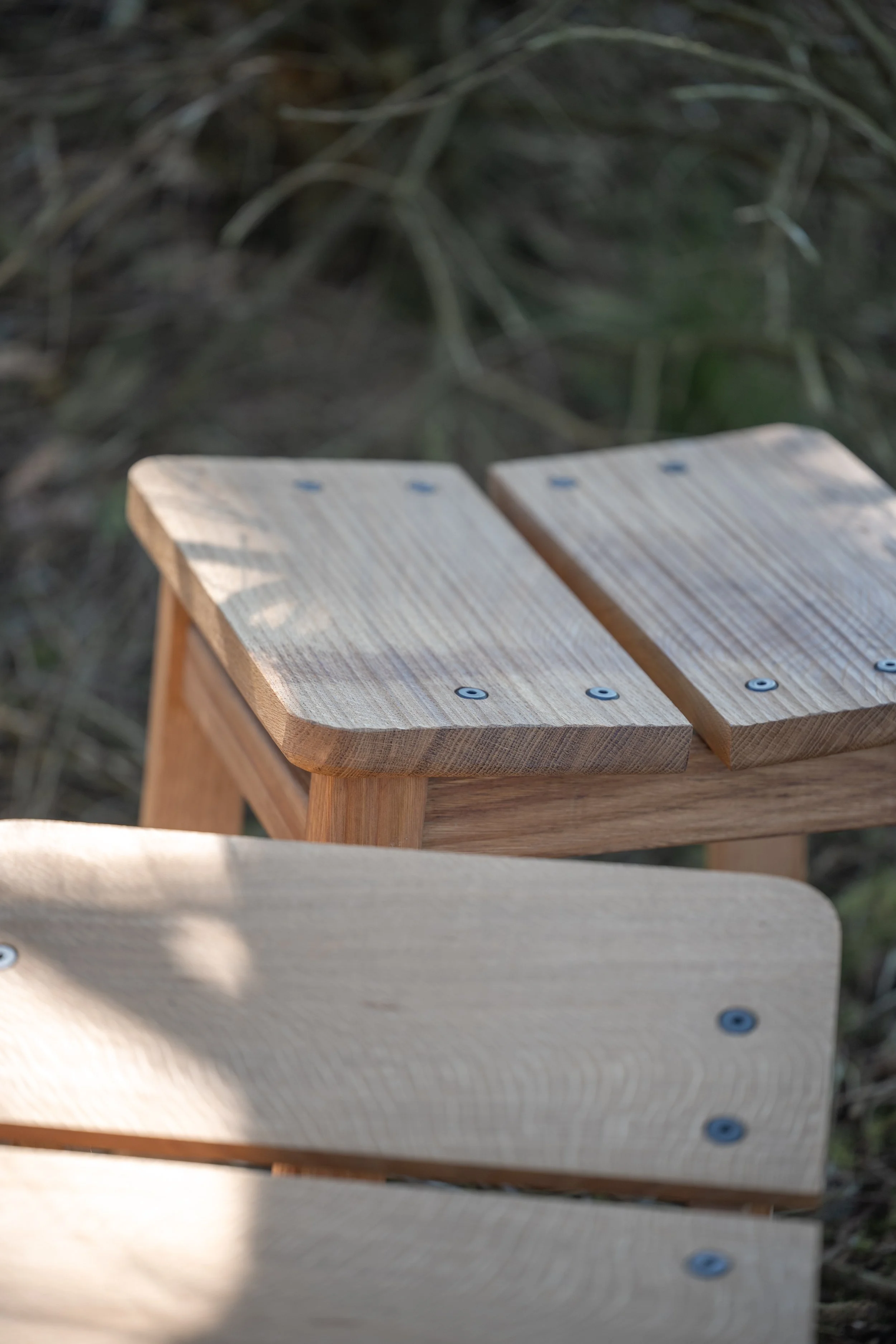
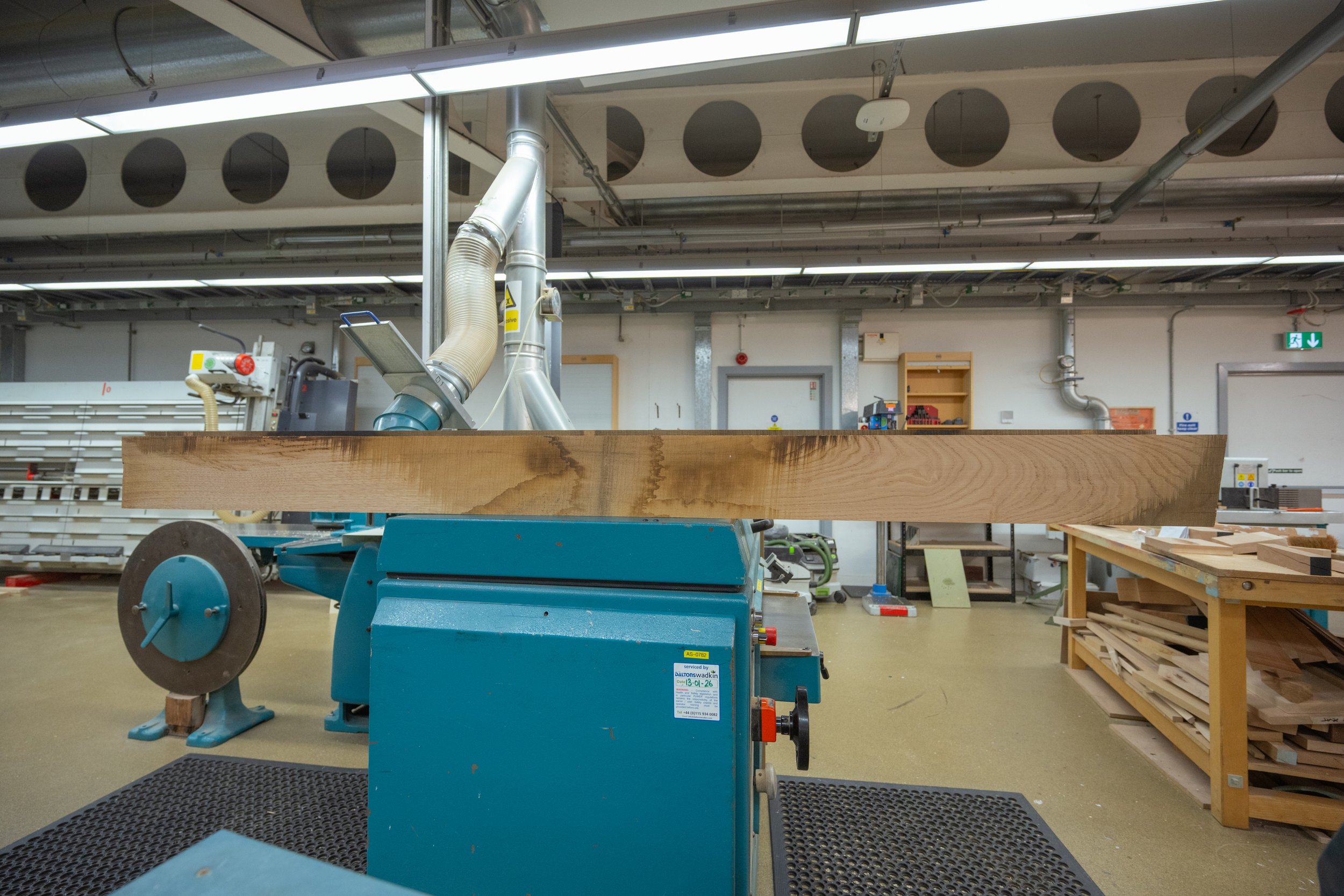
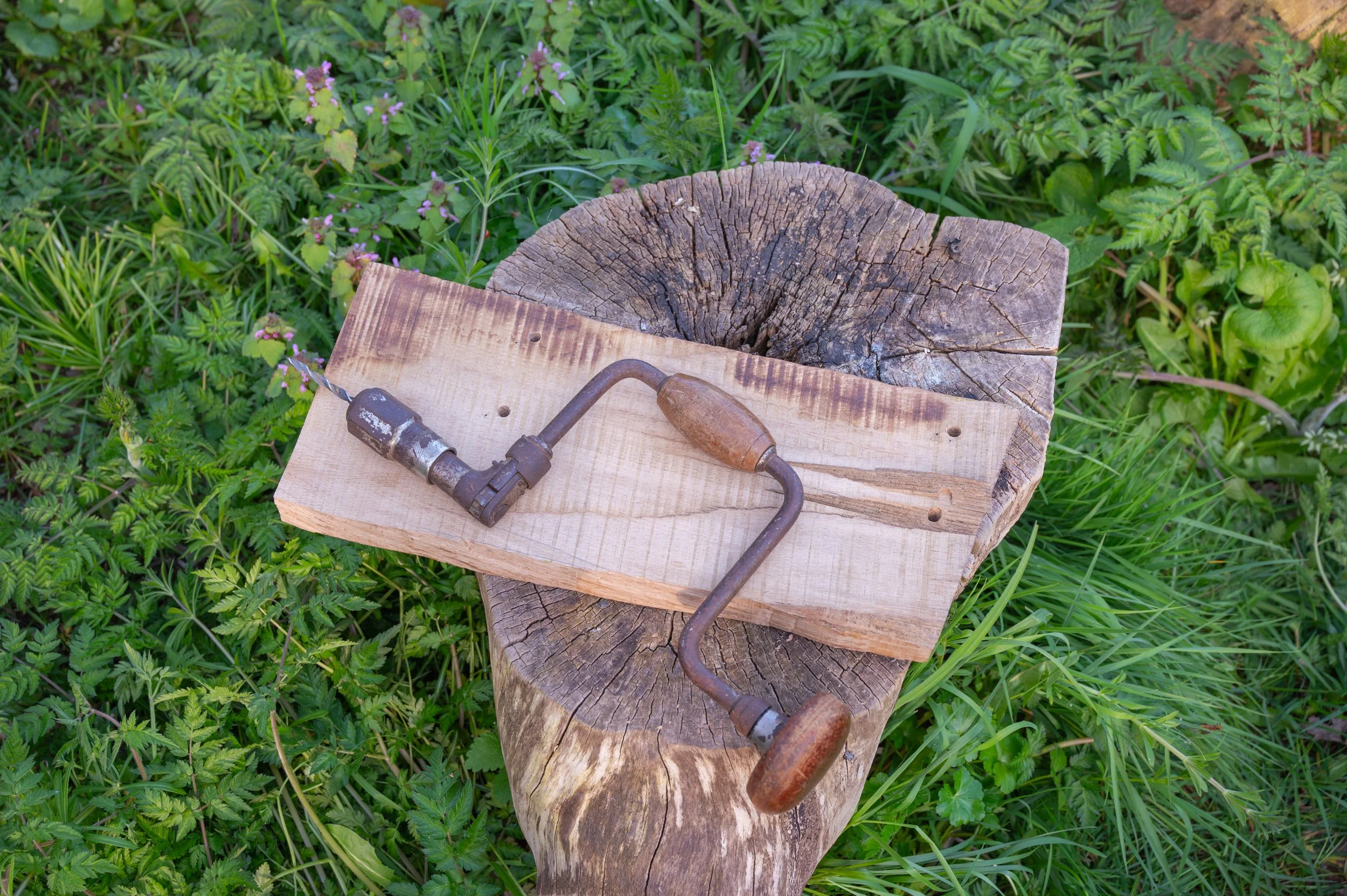
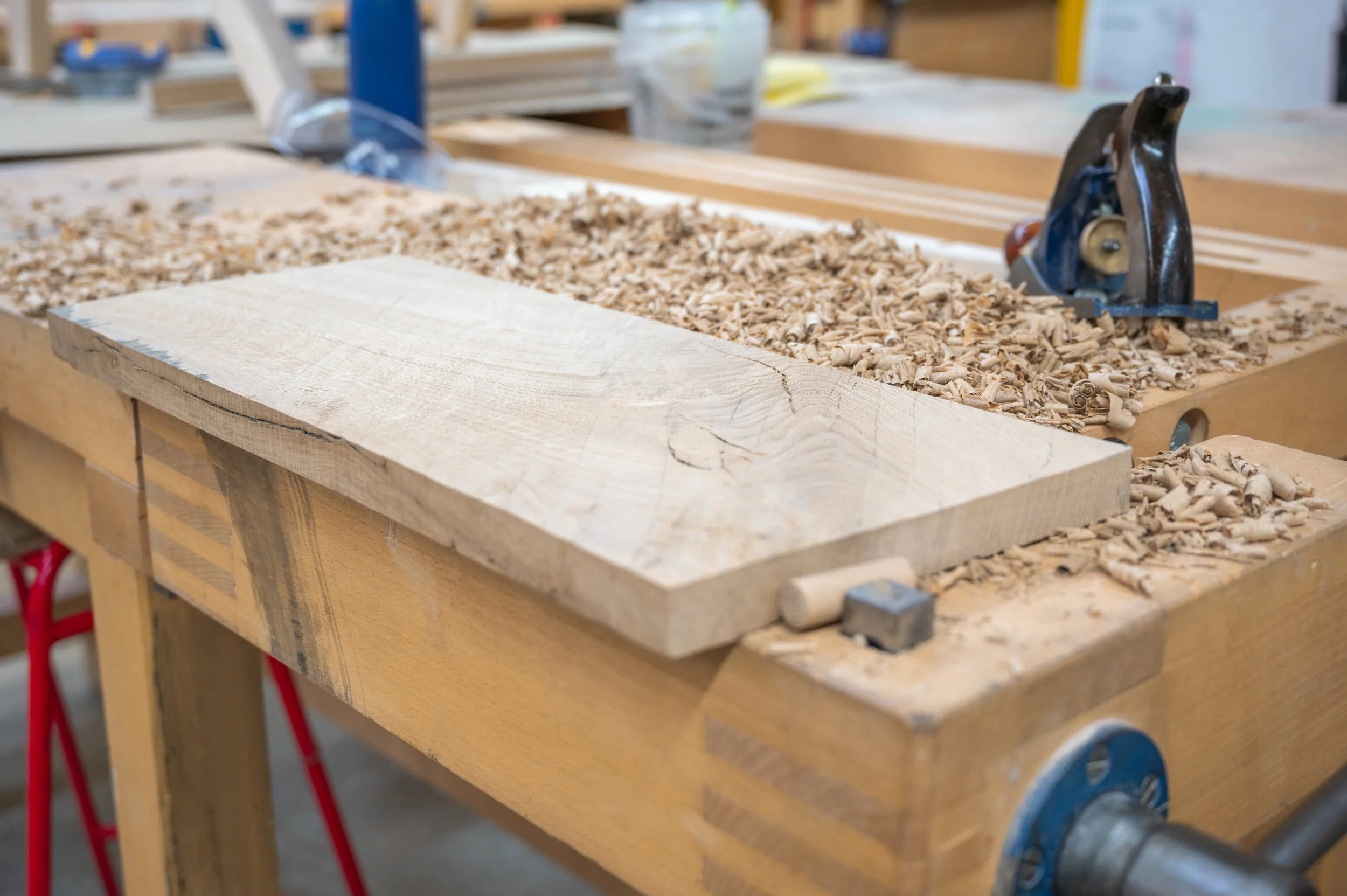
Processing timber has a carbon footprint, yet it’s often overlooked. Instead, these stools face it head on, exploring three methods: a conventional, perfectly machined finish; one involving minimal processing using exclusively hand tools; and a middle ground, combining hand planes with the considered use of machinery. There is always a trade off. But what is more important, silky smooth surfaces or carbon dioxide emissions?
Is timber everything ?
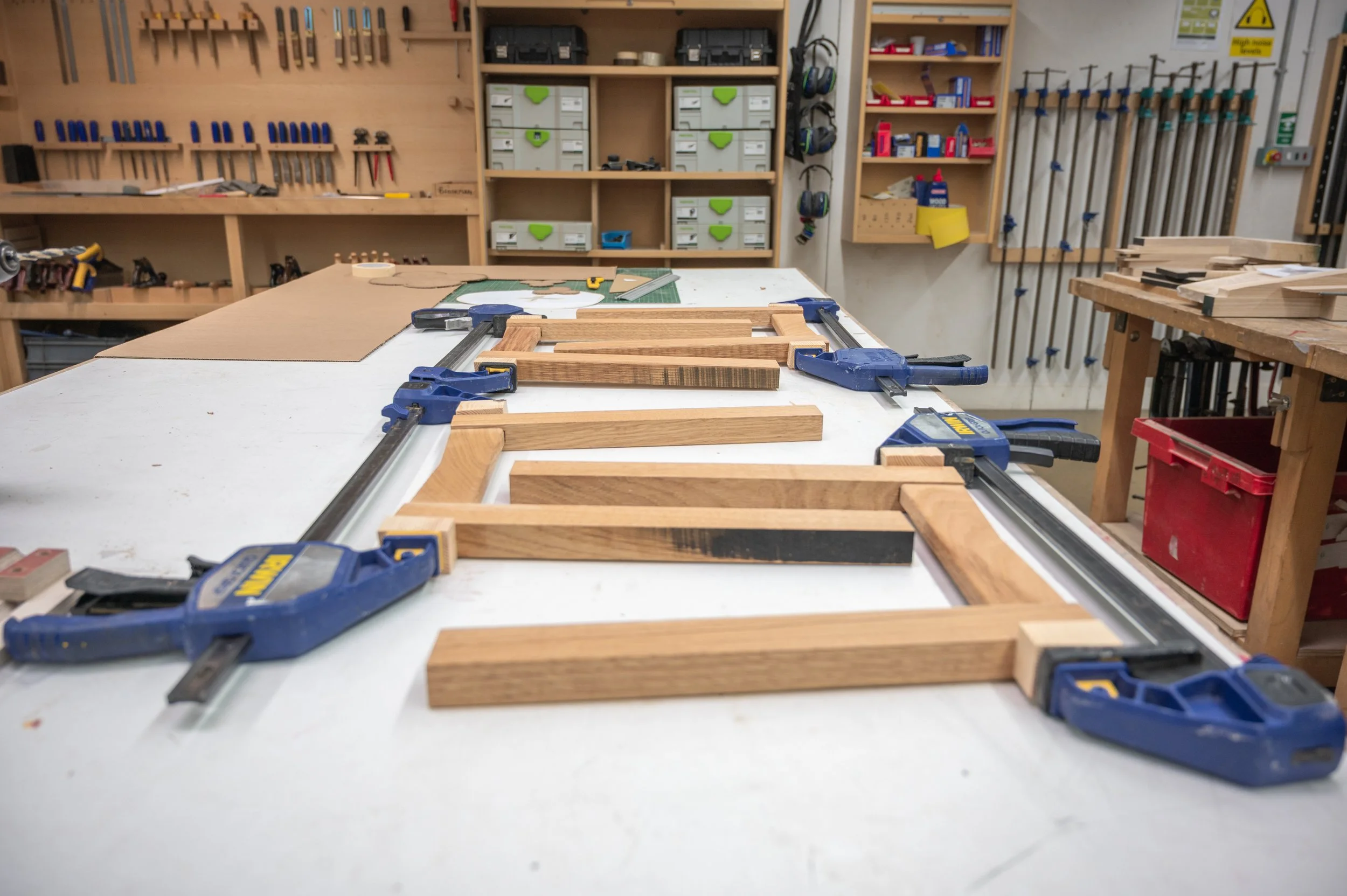
Low carbon furniture isn’t always about materials, design decisions also have an impact. Flatpack furniture isn’t just cheap and cheerful. It makes sense. It makes furniture smaller to transport, which reduces the carbon footprint of shipping. It also separates each individual component, allowing them to be replaced and repaired individually, rather than the whole piece being thrown away. This enables longevity, which when combined with inherently strong draw bore mortice and tenon joints and reversible natural glue, means furniture can last for generations. Metal fixings are an efficient way to attach flat pack furniture, allowing each part to be separated, replaced and recycled at the very end of its life. The stools are finished with hemp oil, a low impact finish that protects the timber while bringing out the richest colour of the grain.
What is the carbon footprint?
The result is three unique stools, each with a different carbon footprint and a different character. I know where the tree grew. I know how the timber travelled, how it was processed and how each of these decisions affected it’s carbon footprint.
The catch is, no matter how much effort is put into reducing the carbon footprint of furniture, if it doesn’t last and is thrown away after a couple of years, much of that effort is wasted.
But if we can change our behaviours and raise our expectations, there is real potential in the choices we make. Choosing quality and intention over trends can lengthen the lifespan of the objects we surround ourselves with. Designers can enable this. People need to want to make different choices, but designers have a responsibility to make it possible. If we stop allowing furniture to have a short lifespan and instead demand a longer one, it can last long enough to be part of our grandchildren’s world.
If all these decisions are considered together, carbon negative furniture can be achieved, provided the carbon stored within the timber remains locked away through a long lifespan.
What will you change first to enable the greatest impact?
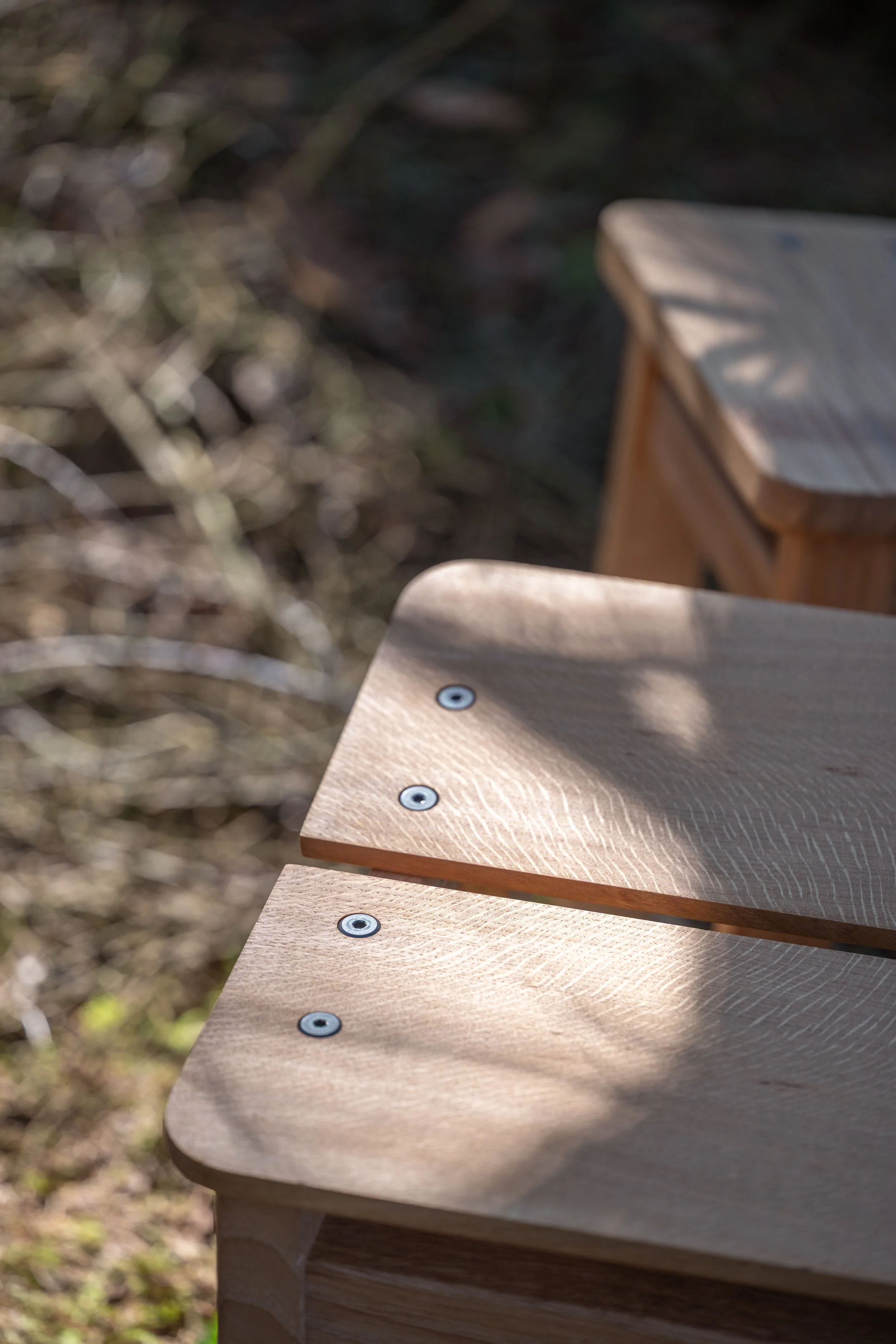
-0.24KgCO2e
Machined
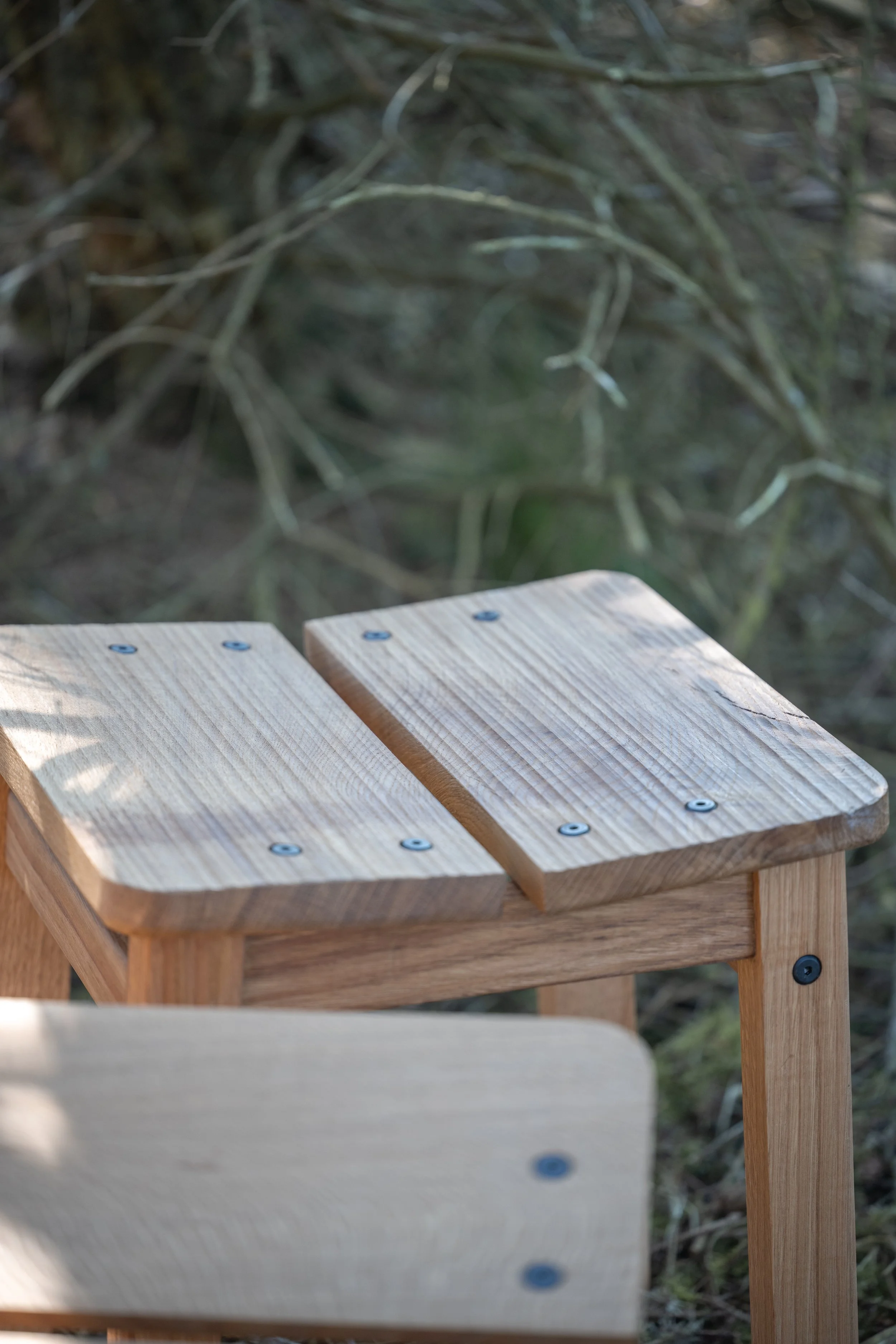
Hand processed
-1.84KgCO2e
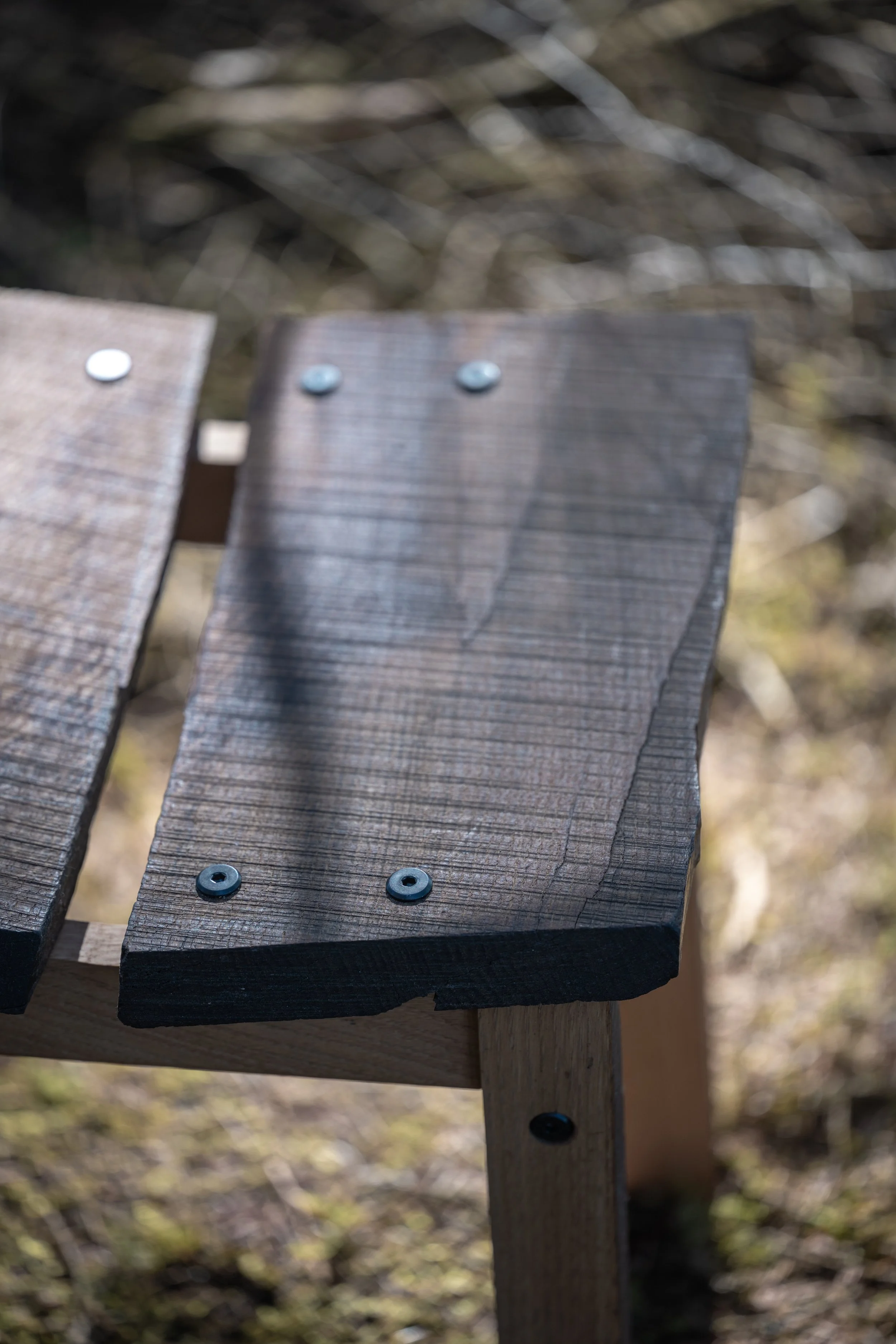
Raw slab
-2.17KgCO2e